START TODAY! | FREE TRIAL


Recent research makes it clear that adherence is the number one factor in seeing results. Reps and sets don’t matter if you can’t stay consistent.
This is where most women get stuck. They think leaner results come from doing more workouts, adding more cardio, and/or avoiding heavier weights
But what drives results … especially after 40 … is how your week is structured.
The 2026 ACSM Position Stand shows consistency, appropriate frequency and smart programming matter far more than any single workout.
This means your results aren’t coming from one great workout. They’re coming from how your workouts fit together across the week.
This is the piece that explains almost everything including the fear of “bulk.”
There is a clear relationship between weekly volume and muscle growth. In simple terms, the more total sets you do for a muscle group across the week, the more stimulus you create for growth.
Most research points to at least 10 sets per muscle group per week as the threshold for optimal results, with a general sweet spot landing between 10–20 total sets per week. Beyond that, results tend to level off, and for many women…especially over 40…higher volume can start to outpace recovery.
We recommend this formula 2x per week:
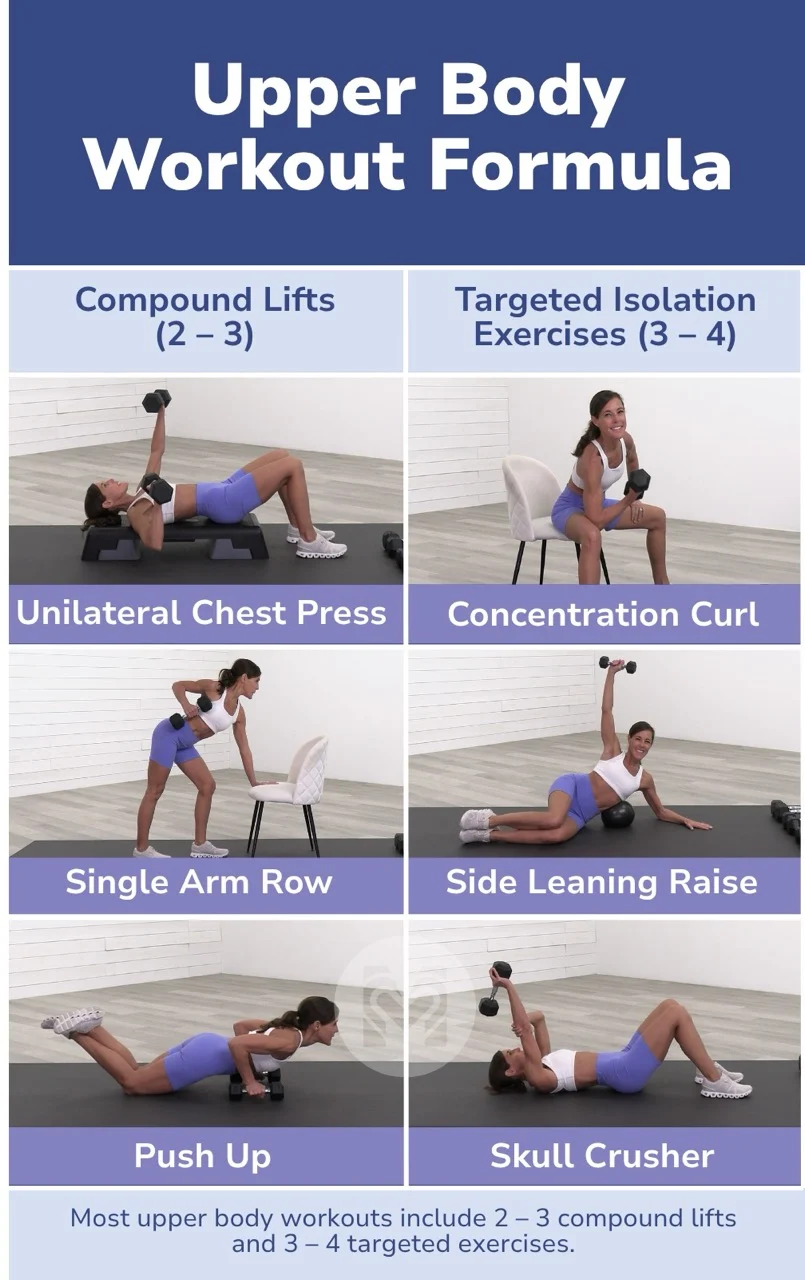
For example:
If you do 3 sets of 3 exercises for a muscle group, twice per week, that’s 18 total sets. You’re already in the upper effective range. Now let’s look at how this plays out with arm exercises.
If you program:
You’re already hitting effective volume once you factor in overlap, because your arms are working more than you think. Biceps assist in rows and pulling movements. Triceps assist in presses. Rear delts are active in most upper body work.
So, your 6 direct sets for biceps and triceps often becomes 8–12 total effective sets across the week. That’s exactly where most women see strength and definition.
But when extra workouts get layered in with more sets, circuits and arm finishers, that number climbs quickly. That’s when arms start to feel overworked, dense, or even bulk if the high volume is constantly repeated.
Not because you lifted heavy, but because your total weekly volume exceeded your goals.
What About Lower Body?
This is where it gets even more important. Women naturally carry more muscle mass in the lower body (about 60–70%) which means the glutes and legs can typically handle (and benefit from) slightly higher weekly volume.
This is why you’ll often see our lower body programming land around 12–18 sets per week for glutes.
Again, it’s not about doing more. It’s about putting your volume in the right place.
I see this story all the time. A woman starts strength training 4–5 days per week with tons of enthusiasm. Three weeks later she feels inflamed, exhausted, and her jeans suddenly feel tighter. In your 20s and 30s, you might push through that. In your 40s it backfires.
Strength training creates micro-tears in muscle fibers (totally normal and what makes you more fit). Your body then triggers a natural inflammatory response. Then the adaptation, the change happens during recovery.
The problem occurs when that inflammation becomes chronic. When workouts are piled on top of workouts. When strength training too often or working muscles on consecutive days (leg day followed by HIIT day) creates an environment of chronic inflammation and fluid retention.
Hormonal shifts during perimenopause can slow muscle repair, making recovery even more important. Those hormones are what make workouts suddenly feel harder in your 40s. Recovery is more important now than ever!
Recommended recovery times are:
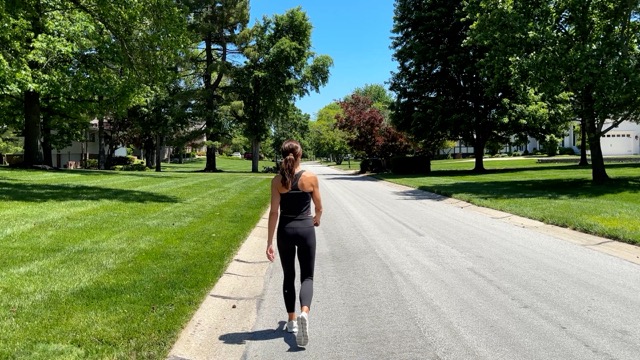
Recovery days = Walking. You’ve got to move to get your body back towards homeostasis, improving circulation and resolving the inflammation.
This is also why three strength sessions per week works so well for most women. It provides enough stimulus to build strength and shape, while still allowing your body to recover, regulate, and show results.
And if you’re in a season where stress is higher or sleep isn’t ideal, you don’t need to do more. You need to scale back slightly, stay consistent, and trust the process.
Progressive overload is the reason strength training works. It simply means gradually increasing the challenge placed on your muscles over time. This can come from lifting slightly heavier weights, adding pause/tempo, or increasing range of motion.
What matters most is that your workouts don’t feel completely new every time. Your body needs repetition to adapt.
Constantly changing workouts can feel productive, but it keeps your body in a constant state of soreness instead of progress.
When you repeat movements and build on them, your body finally gets a clear signal to change.
Walking is the best recovery cardio, and for most women, it’s also the best cardio after 40.
Strength training builds your muscle. Walking helps burn the fat that sits on top of that muscle. You need both but not in the way most women think.
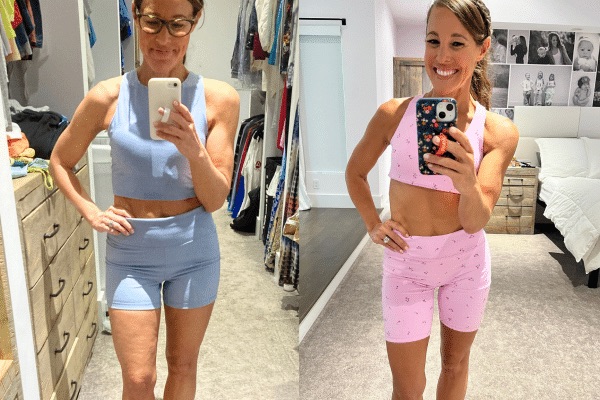
Three weeks. That’s all it took for my body to start changing—seven inches gone, better sleep, and more energy than I’d felt in months. I didn’t overhaul my diet or double my workouts. I walked every day and slowed down enough to breathe again.
At first, it felt too simple, but something deeper shifted. My stress levels dropped. My cravings steadied. I stopped feeling like my body was fighting me. That’s when I started digging into why walking works so well after 40.
Walking is powerful for hormones, but even more importantly, it supports the nervous system that regulates them. When your nervous system is balanced, cortisol, estrogen, and progesterone work in better rhythm.
Walking is more than calorie burn. It’s a signal to your body that you are safe. When cortisol is high, your body stays in a constant fight-or-flight state. Walking, especially at a steady pace outdoors, shifts your body into a rest and restore state. That’s why it feels so different.
It’s not “easy cardio.” It’s low impact but metabolically powerful. You’re improving your aerobic system while calming your nervous system at the same time.
This is the formula I’ve built from over 30 studies and years of working with women over 40:
That’s it. You don’t need long cardio sessions. You don’t need to push harder. In fact, doing more often backfires raising cortisol, slowing recovery, and making fat loss harder.
Walking works because it supports your body instead of stressing it. It improves fat metabolism, lowers inflammation, speeds up recovery between strength sessions, and helps regulate sleep and daily energy. And most importantly, it’s something you can stay consistent with, because just like strength training, consistency is what creates results.
Your body doesn’t just need structure within a week. It also needs structure over time. Most programs work best in 4–8 week blocks.
Within that time, you repeat similar workouts while gradually increasing the challenge. This is what allows progressive overload to work. Instead of constantly starting over, you build momentum. Then, at the end of that block, you pull back. This is where a recovery week comes in as talked about above.
If you want to understand this deeper, including why too much muscle confusion isn’t a good thing, you can read more here.
As the 2026 research suggests, you don’t need a gym. At home workout equipment and exercises work just as well, sometimes better for consistency.
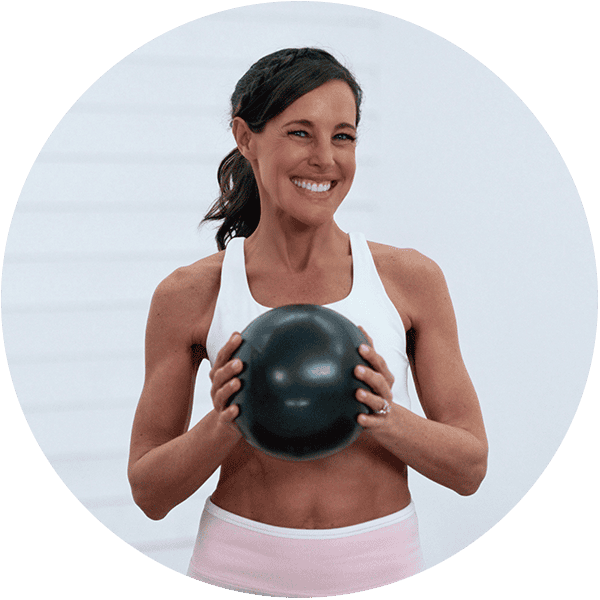
Lindsay Brin holds a degree in Exercise Science and has over 20 years of experience helping women, especially women over 40, build strength and redefine what fitness means for life. She has certified Pilates instructors and CPTs across the U.S. and developed a fitness course accredited by National Academy of Sports Medicine (NASM) and American Council on Exercise (ACE).
But her most transformative learning came after 40, when she began experiencing perimenopause. Lindsay immersed herself in the science of aging, hormones, walking, HIIT, and strength training—ultimately developing a method that works with your body, not against it.
This is now the foundation of Moms Into Fitness, which has helped over 85,000 women rebuild strength, renew energy, and create lasting results.