START TODAY! | FREE TRIAL


Don’t let the scale confuse your progress, it doesn’t tell the full story!
The photo above shows a 3.5% fat loss with only a 1-2 pound difference on the scale—all from strength training 3x per week, daily walking, and letting go of the high intensity workouts that were stressing my hormones and nervous system.
If you’ve ever started exercising, felt stronger, watched your clothes fit better, and then stepped on the scale only to feel disappointed, you’re not alone. Maybe you’ve asked yourself:
The truth is that fat loss and weight loss are not the same thing. In fact, when you begin strength training, the scale often becomes the worst tool for measuring progress.
Free Guide: Strength Training for Women Over 40
Want a simple approach to building strength and seeing progress beyond the scale? GET MY FREE GUIDE
Here are 5 reasons why.
Women often assume every pound is fat. It’s not.
After a hard lower body workout, your muscles hold extra fluid while they repair and rebuild.
After a salty restaurant meal, your body may hold extra water.
During certain phases of your menstrual cycle, hormone shifts can cause noticeable fluid retention. The scale sees all those things the same way.
Fat gain. Water retention. Muscle glycogen. Inflammation. To the scale, they’re all just weight.
This is one reason daily weigh-ins can be so frustrating. The scale doesn’t know whether you’re retaining water from a workout, recovering from a poor night’s sleep, approaching your period, or gaining body fat.
Not even smart scales! More on that in a minute.
This is such an important concept.
When someone starts strength training, the first thing that improves is often neuromuscular efficiency. Your brain and muscles learn to communicate better.
You get stronger before you build noticeable muscle. At the same time, muscles store more glycogen and water while adapting to training.
So, during those first couple of weeks:
That’s why the scale often creates panic right when the body is doing exactly what it should.
What’s really happening?
Most of the early changes come from neurological adaptations. Your brain and nervous system become more efficient at activating muscles, making you feel stronger before noticeable muscle growth occurs.
During this phase, muscle cells also hold more glycogen and water. This can temporarily make muscles look fuller even though no significant new muscle tissue has been added yet.
Instead of talking about inflammation as a medical term, let’s talk about how it shows up in everyday life:

At 39, I could see it in the crooks of my arms. I saw it in my eyes and felt it in my fingers. It felt like my legs had suddenly swelled with cellulite.
Perimenopause changed how my body responded to exercise. I was doing all the wrong things…too many reps, too much HIIT, chasing soreness, and constantly trying to exercise my way out of inflammation.
What I eventually learned was that strength training wasn’t the problem. It was recovery!
This is why I created the Weekly Shedule for women over 40. Experience real change with strength training 3x per week and daily walking.
Preserving muscle during fat loss is crucial. Muscle is metabolically active, meaning it helps your body burn more calories even at rest.
This is why focusing on body composition, rather than just weight, is the best strategy for long-term success.
Muscle and fat are very different tissues. Muscle is approximately 75% water, while body fat is only about 10-15% water. Healthy muscles store glycogen and water, which the scale registers as weight.
Because muscle is denser, it takes up less space than fat. This is why two women can weigh the same amount but wear different clothing sizes.
The goal is to lose excess body fat while preserving the muscle that keeps you strong, toned, and healthy. Or body recomposition.
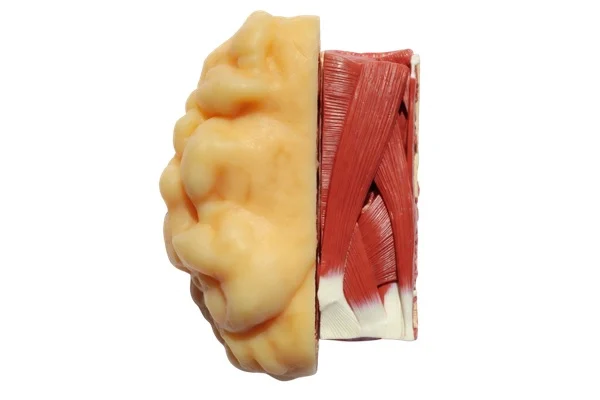
This is probably the biggest lesson. A woman can:
And the scale changes by zero pounds.
Yet, her waist is smaller. Her clothes fit better. Her energy is better. Her blood sugar is better. Her strength is better.
That’s why measurements, photos, strength gains, energy, sleep, and how clothes fit often tell a much more complete story than body weight alone.
One of the first signs of progress is often losing inches…not losing pounds.
Your waist, hips, arms, and thighs may change long before the scale reflects those improvements.
To see visible muscle definition and a more toned shape typically takes 4-6 weeks of consistent training. This is why patience and consistency matter so much.
Walking plays a huge role in fat loss.
While strength training helps build and preserve muscle, walking reduces the inflammation and fat so we can see the lean muscle underneath.
Walking improves circulation, reduces stress on the nervous system and increases daily calorie expenditure without creating more inflammation.
If you’re frustrated with the scale, walk more. It’s one of the simplest and most effective tools for long term fat loss.
Smart scales that measure body fat, muscle mass, and water weight may seem helpful, but they’re not always reliable.
These scales use bioelectrical impedance analysis (BIA), which estimates body composition based on how electrical signals travel through your body.
These are simply estimates, not accurate readings.
Hydration levels, menstrual cycle timing, food intake, and even foot placement on the scale can affect readings.
This means you could see misleading fluctuations that don’t truly reflect your fat loss progress. Instead of relying on a scale, focus on:
The scale has never made a single woman happy. It measures gravity, not progress.
Ditch the scale and focus on body composition. Strength training, walking, proper recovery, and good nutrition will help you lose fat while maintaining muscle.
The scale may eventually reflect those changes—but often long after your body already has.
So instead of asking:
“What do I weigh?”
Start asking:
“Am I stronger? Do my clothes fit better? Do I feel better?”
Those answers will tell you far more than the scale ever will.
Lindsay Brin holds a degree in Exercise Science and has over 20 years of experience helping women, especially women over 40, build strength and redefine what fitness means for life. She has certified Pilates instructors and CPTs across the U.S. and developed a fitness course accredited by National Academy of Sports Medicine (NASM) and American Council on Exercise (ACE).
But her most transformative learning came after 40, when she began experiencing perimenopause. Lindsay immersed herself in the science of aging, hormones, walking, HIIT, and strength training—ultimately developing a method that works with your body, not against it.
This is now the foundation of Moms Into Fitness, which has helped over 85,000 women rebuild strength, renew energy, and create lasting results.